Texture Is the New Luxury: Why 2026 Interiors Are Designed to Be Touched
Texture Is the New Luxury: Why 2026 Interiors Are Designed to Be Touched
For readers assessing luxury Italian fabrics, the practical question is how the idea performs in a real room, not only how it photographs. Heimtextil ran in Frankfurt from 13 to 16 January 2026 with 3,000 exhibitors, 148 participating nations and more than 48,000 buyers. Over the Trend Arena, assembled with the Milan design platform Alcova, hung a three-word motto: “Craft is a verb.” It is still the most accurate thing anyone said about textiles this year. Texture is not a colour you pick off a screen; it is a structure that does not exist until a hand moves across it.
What texture actually is, four scales down
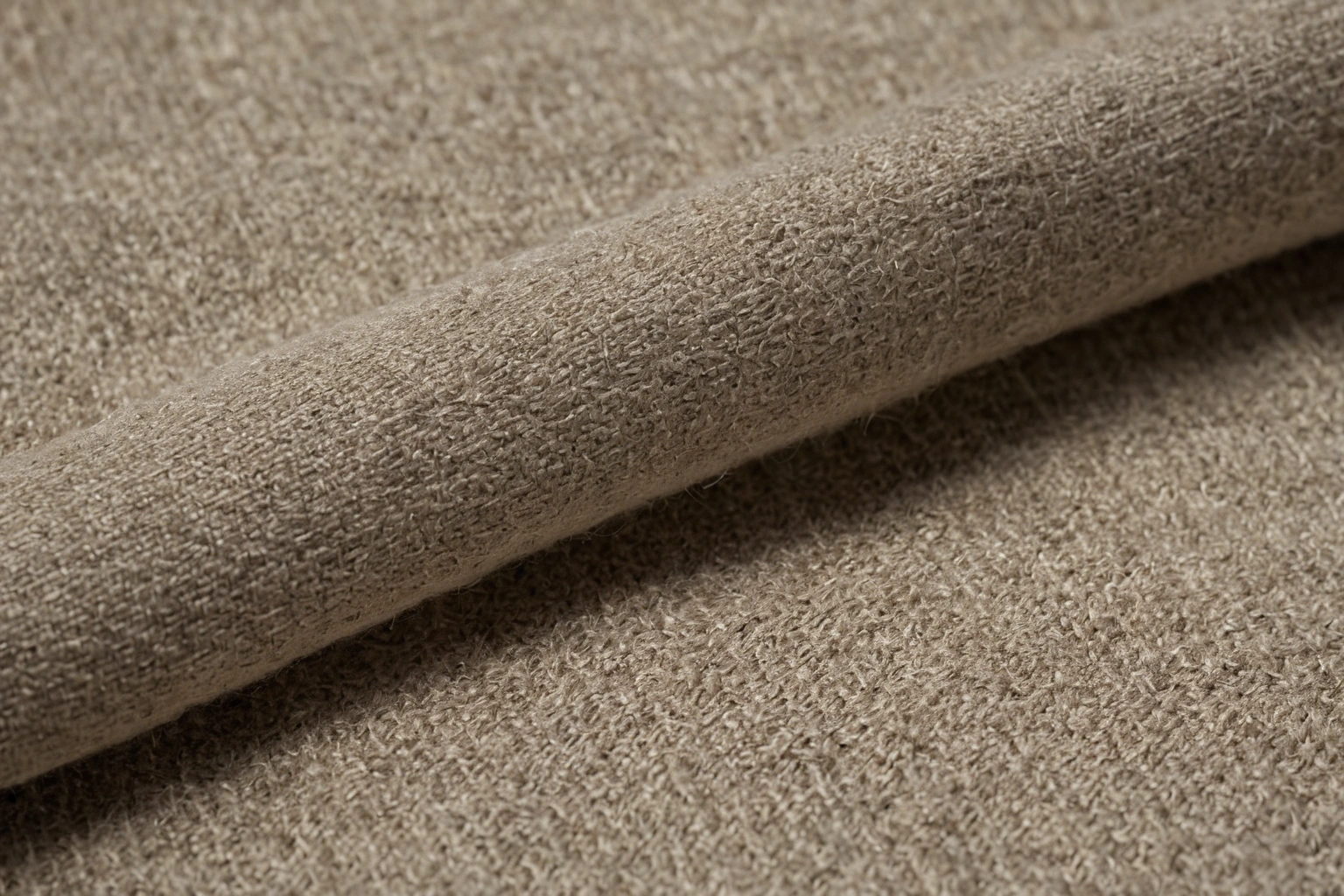
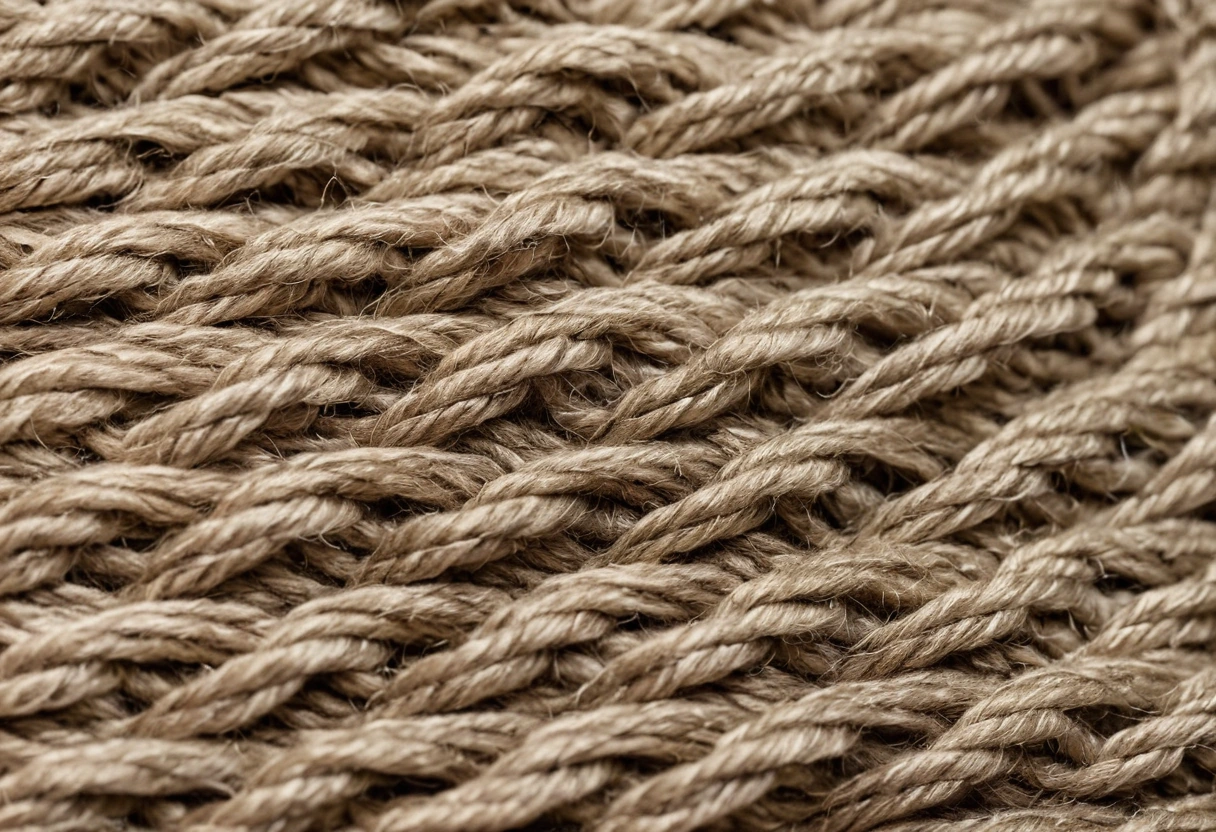
The word gets used as though it meant “interesting-looking cloth.” In a woven fabric it is built four times over. It starts at the fibre: wool has scales, and a scale is a surface. Then the yarn, where spinning adds twist, S or Z by direction, and a slub carries “thick or thin sections alternating regularly or irregularly.” That grain in a linen is a decision, not a miss.
Then the weave: how often warp and weft cross sets how broken the surface is. In a satin the weft passes over several warps and under one, and those floats mean “light is not scattered as much when hitting the fibres, resulting in a stronger reflection.” Finally pile, the third dimension. Velvet is woven as two thicknesses at once, joined by an extra warp over rods, then cut apart.
| Structure | How it is made | Hand | What the light does |
|---|---|---|---|
| High-twist plain weave | Hard-spun yarn crossing at every thread | Crisp, cool, dry | Constant interruption; matte and flat |
| Slubby linen | Yarn spun with thick and thin sections alternating | Grainy, irregular, dry | Thick sections catch, thin ones drop away |
| Satin | Weft floats over several warps, under one | Fluid, slippery, cool | Long floats reflect together; lustrous |
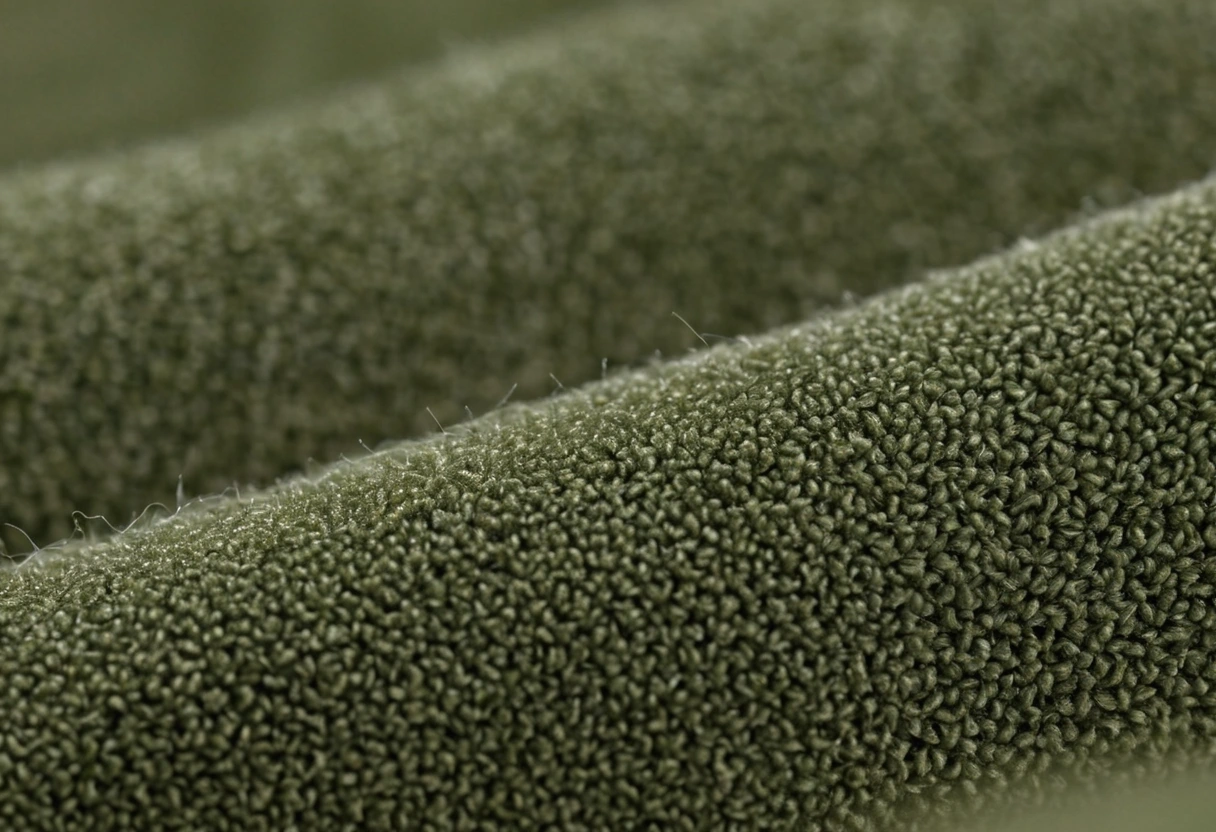
| Cut pile (velvet) | Two cloths woven face to face, joined, cut apart | Dense, soft, directional | Fibre ends scatter; deep and matte, shifts with the nap |
| Loop pile (bouclé) | Effect yarn plied loose, throwing loops onto a core | Nubbly, springy, dry | Each loop lit on its crown, shadowed beneath; relief |
Texture is a light-scattering structure
Here is the part the trend write-ups skip. Gloss depends on three things: the refractive index of the material, the angle of the incoming light, and the surface texture. Rough surfaces “reflect no specular light as the light is scattered in other directions and therefore appears dull.” A related practical reference is available in Single-Storey or Stacked House: Choosing Massing Around Stairs, Shade, Plot Width, and Aging.
Texture and finish are therefore not two separate choices. They are one geometry. A matte velvet is matte because thousands of cut fibre ends per square centimetre scatter light in every direction, and it feels the way it does because of that same standing pile. Velvet can be cut “pile up” or “pile down” for more shine or more saturated colour.
A fabric’s hand and a fabric’s look are not two properties that happen to correlate. They are one structure, read by two senses.
Why the photograph flattens the one thing that matters
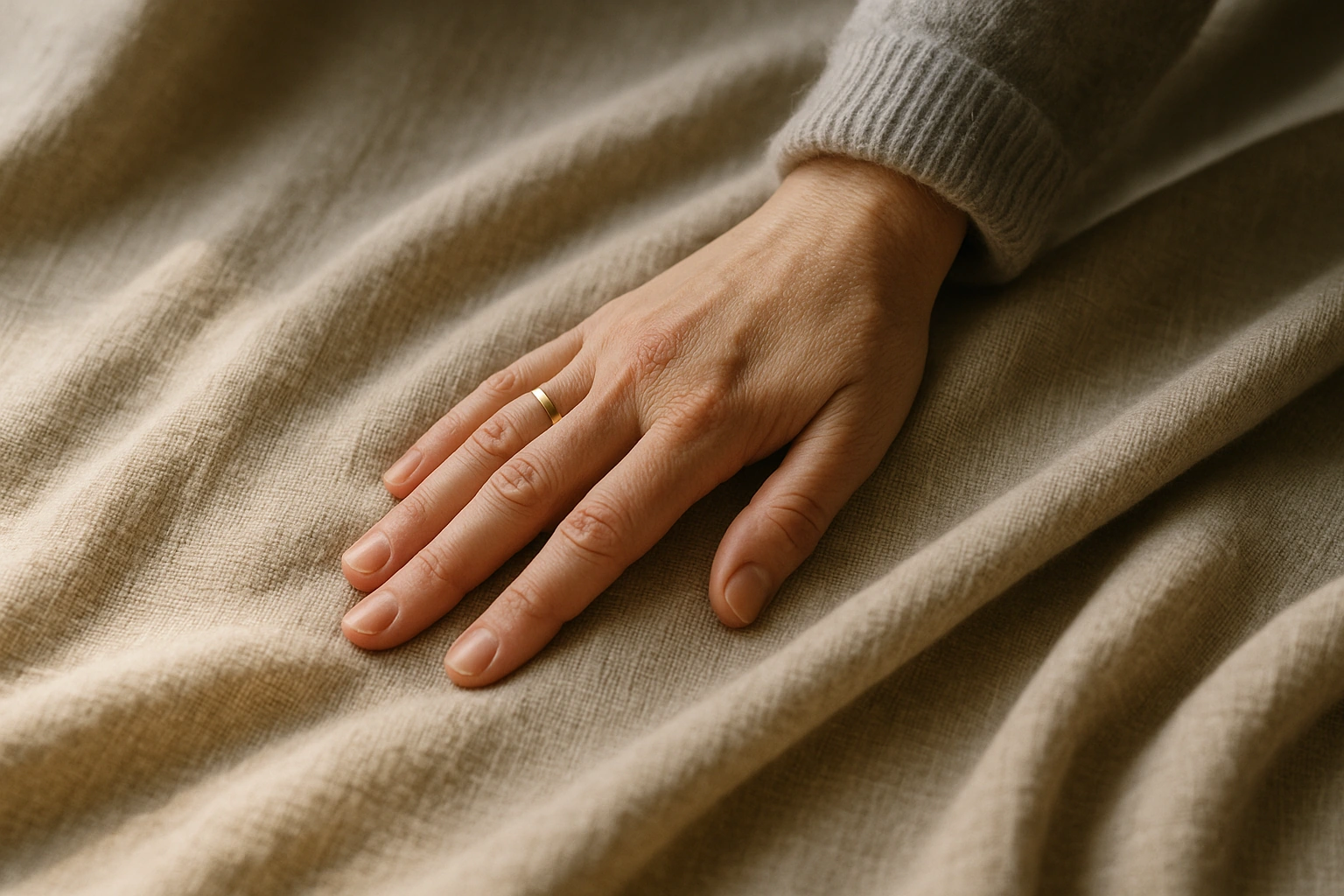
Haptic perception is defined by movement: active exploration by a moving subject, as opposed to passive contact by a static one. In Lederman and Klatzky’s 1987 classification of exploratory procedures, the one that returns texture is lateral motion. Sliding. Not pressing, not holding.
The duplex theory of tactile texture perception sharpens the dependency. Coarse textures, above roughly 100 micrometres, are read spatially and stay discriminable whether or not anything moves. Fine ones are read as vibration, generated by a fingertip on the move. In Hollins and Risner’s experiments, fine surfaces people told apart easily while the fabric moved across the skin became indistinguishable once it stopped. Not degraded. Gone. This decision can also be compared with the site’s guide to AED 161M Palm Jumeirah Villa Anatomy: What Trophy Buyers Pay For.
The resolution at that end is startling. In a 2013 study in Scientific Reports, researchers made surfaces with wrinkle wavelengths from 300 nanometres to 90 micrometres and amplitudes between 7 nanometres and 4.5 micrometres, then had people explore them by hand. The smallest amplitude participants could tell apart was around 10 nanometres.
Now photograph a sofa. Two metres of it rendered 1,536 pixels wide gives about 1.3 millimetres of cloth per pixel. The entire fine-texture band, everything read as vibration by a moving hand, fits inside one pixel with room to spare. The image also fixes the light angle and removes motion. This is not bad photography: a still image cannot carry the property, which is why buyers who know the job ask for the memo. The wider project context is available from poordesigners.com.
Why touch became the competitive surface
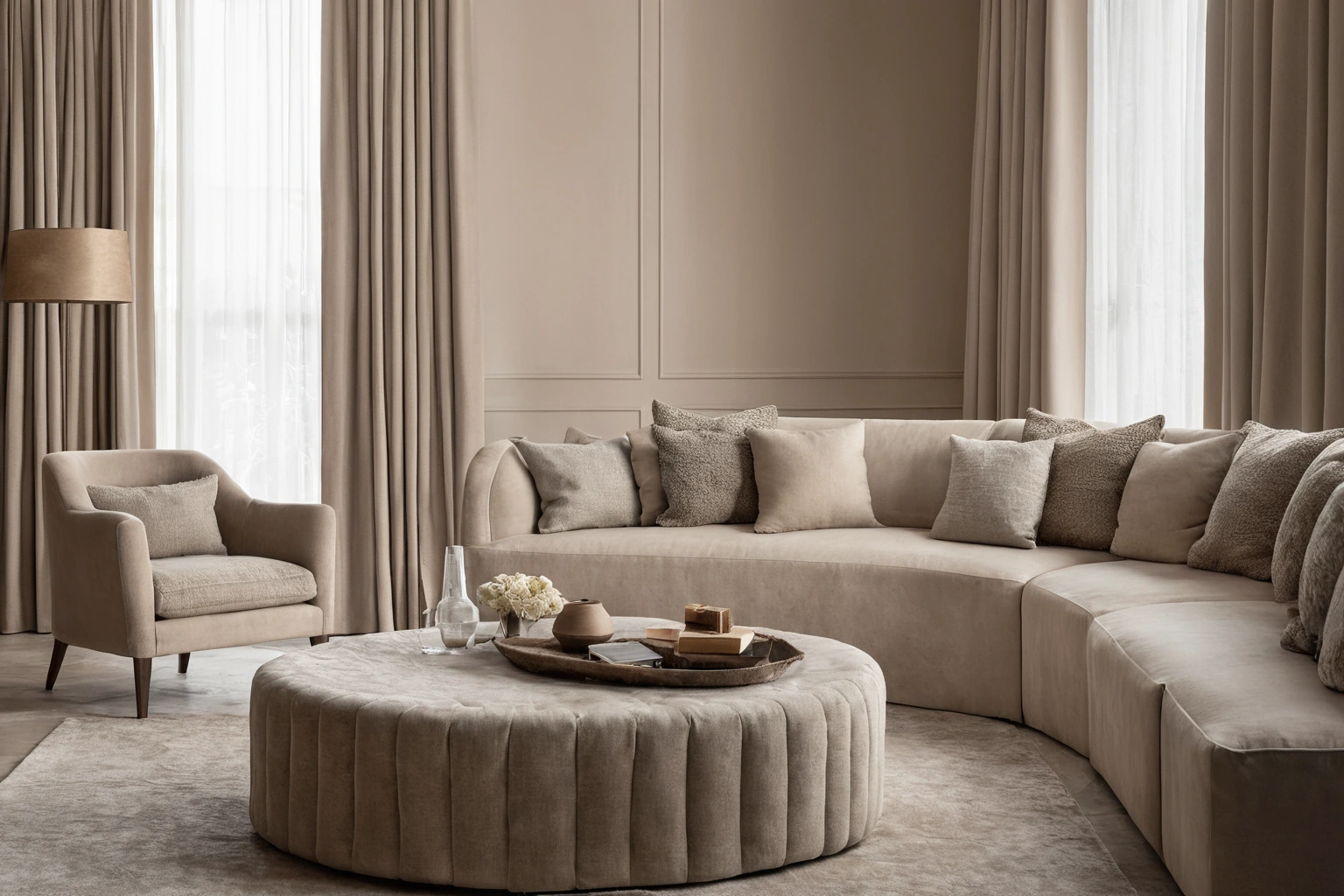
Quiet luxury spent a decade stripping signals out of a room. The logo went first, then the loud pattern, then the saturated colour. What remains once ornament and contrast are gone is surface, and surface is where the money now goes. The anti-minimalist turn in 2026 interiors, padded walls, bas-relief, suede, slubby linen, is restraint that ran out of variables.
The second reason is screens. When every object is sold through an image, what an image cannot transmit is the only thing that cannot be copied. Among the six directions the Trend Arena set out was Crafted Irregularity, which treats visible seams and uneven dyeing as the design, not the defect. An irregularity is a thing you can only verify with a hand.
The vocabulary, before you specify anything
- Twist
- The spin in a yarn, S or Z by direction. Hard twist gives a dry, compact hand; soft twist gives loft.
- Slub
- Thick and thin sections alternating along a yarn. The source of linen’s grain.
- Float
- Yarn passing over several opposing yarns without interlacing. Long floats make satin, and lustre.
- Pile
- Yarn standing off the ground weave. Cut pile gives velvet; loop pile gives bouclé.
- Nap
- The lie of the pile. It gives a cut-pile cloth a direction, and a direction gives it two values.
How to judge a fabric properly
If texture is what you are buying, the usual showroom ritual tests almost none of it. A thumb pressed into a swatch measures compression, not surface. For the next stage of the brief, see About Us.
- Slide, do not press. Lateral motion returns surface information; a stationary finger reports density.
- Get the sample to a grazing angle. Sheen is gloss at a grazing angle; a matte surface only declares itself at a low one.
- Insist on a memo, not a stamp. A slub repeat or a loop rhythm needs area. A 10 centimetre square hides its own scale.
- Find the nap and mark it. Decide which way the pile runs before the upholsterer decides for you; that sets the colour of the finished piece.
- Look at it in the room, at the hour you use the room. Showroom light is engineered to flatter.
The supplier side is a fair test too. A serious mill selling Italian upholstery and drapery fabrics sends a memo large enough to fold and drape, because the cloth is the argument and a photograph of it is not. The questions worth asking are short.
- Is the pile cut or looped, and which way should the nap run on this piece?
- What is the repeat, and how large a piece do I need before I can see it?
- Is the irregularity engineered into the yarn or introduced in the finish?
Craft is a verb, and so, it turns out, is texture: not a property a cloth has while it sits there, but what happens when a structure meets moving light or a moving hand. It is the one part of a luxury interior that cannot be transmitted or faked. Which is why the market now sells it.